Hydroxypropyl Methylcellulose HPMC
Hydroxypropyl Methylcellulose HPMC is derived from natural polymer materials, undergoes a sequence of chemical processes to yield a non-ionic cellulose compound. This odorless and non-toxic white powder readily dissolves in cold water, forming a transparent and thick solution. It demonstrates commendable attributes including effective water retention, thickening capabilities, emulsification, film formation, suspension, adsorption, gelation, surface activity, and functioning as protective colloids.
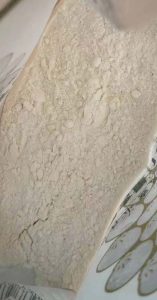
SHMP | Sodium Hexametaphosphate
SHPM | Sodium Hexametaphosphate encompasses a spectrum of alternative names. It can be called as Calgon, polyvinylidene sodium, sodium metaphosphate vitreous body, sodium multiple metaphosphates, Graham salt, or most commonly referred to as SHMP.
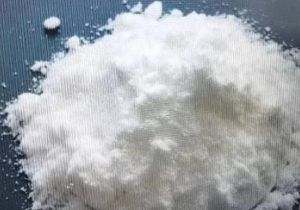
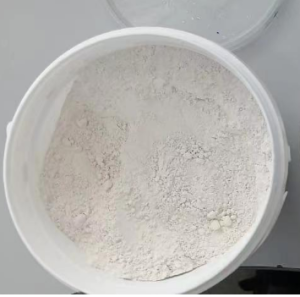
Polyethylene Wax
Polyethylene wax have the characteristics of heat stability, chemical resistance, and hardness. Additionally, polyethylene wax boasts attributes such as abrasion resistance and a broad melting point range. This combination of features, coupled with its capacity for reducing cohesion between polymer molecules, positions PE wax as an effective internal lubricant that promotes compatibility with various polymers.
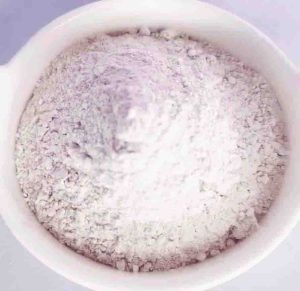
Glass Beads for Paint
Glass Beads for Paint : Glass beads are used in low-density drilling fluids, rubber and plastic manufacturing, as well as paints and coatings. Their significance extends to a noteworthy advancement in the realm of road marking paint design and application. Particularly, they are a crucial component of premium thermoplastic paint used for road markings, contributing to enhanced road luminance during daylight hours for drivers.
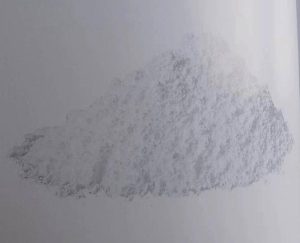
Wax PE
Wax PE is a type of polymer derived from low molecular weight polyethylene. This material exhibits wax-like attributes due to its distinct properties, which include low viscosity, a high level of hardness or brittleness, and a relatively elevated melting point. These characteristics stem from its fundamentally linear structure.
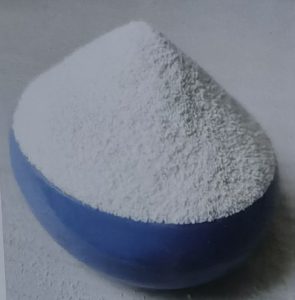
PE Wax
PE Wax is a type of ultra-low molecular weight polyethylene composed of ethylene monomer chains. This wax serves various functions, including acting as a dispersant, slip agent, resin additive, and mold release agent. It is based on ethylene monomer chains and is commonly dispersed in aromatic and aliphatic solvents. This dispersion enhances the anti-settling properties of coatings and inks. PE Wax exhibits characteristics such as thixotropy, anti-sagging, and the ability to position metallic pigments effectively.
Glass Microspheres
Glass microspheres are minuscule glass spheres that find application across a wide spectrum of industries. These microspheres possess remarkable attributes like corrosion resistance, fire resistance, and non-conductivity. With a history spanning over a century, glass microspheres have been a staple, contributing significantly to various sectors.
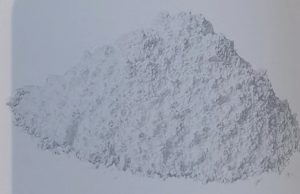
Hollow Glass Sphere
Hollow glass spheres are essentially near-perfect engineered bubbles crafted from thin-walled glass. They measure around 50 microns in size. These microspheres, due to their lightweight nature, are utilized as fillers in composite materials such as syntactic foam and lightweight concrete. They can be integrated into various products like paint, coatings, construction sealants, rubber, plastic, FRP, artificial stone, and putty as additives.
Understanding Organoclay: Applications, Benefits, and Innovations
Understanding Organoclay:
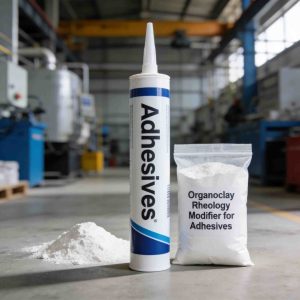
High-Purity Organoclay for Industrial Sealants
High-purity organoclay is a key component in industrial sealants where performance consistency and durability are critical. Purity influences dispersion efficiency, rheological strength, and long-term stability.
Industrial sealants often contain high filler levels and operate under mechanical stress. High-purity organoclay provides robust thixotropic networks that resist collapse, maintaining viscosity under demanding conditions.
Improving Film Integrity in Paints with Organoclay Additives
Improving Film Integrity in Paints with Organoclay Additives: improve film integrity and durability in paint formulations with organoclay, ensuring long-lasting results in industrial coatings.
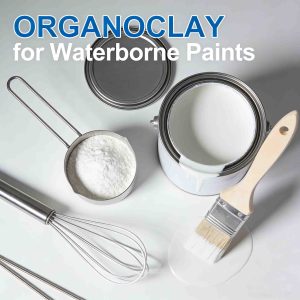
Organoclay for Anti-Corrosive Paint Enhancements
Organoclay enhances anti-corrosive paint formulations, ensuring optimal protection and durability for coatings exposed to harsh conditions.

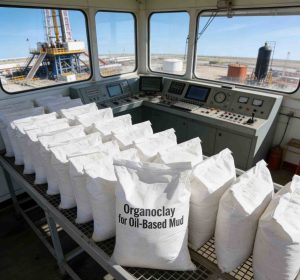
Organoclay Rheology Modifier for Drilling Slurry
Organoclay Rheology Modifier for Drilling Slurry | Controlled Flow and Suspension
Organoclay rheology modifiers for drilling slurry applications, providing viscosity control, gel strength, and stable solids suspension.
Drilling slurries used in oil-based and synthetic-based systems require rheology modifiers that deliver consistent performance under varying shear and temperature conditions. Organoclay rheology modifiers fulfill this role by building a structured network within the slurry.