Category: Organoclay

zinc dialkyldithiophosphate

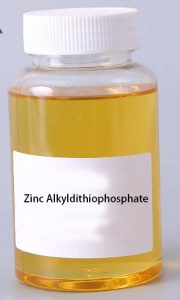
Zinc Alkyldithiophosphate

Zinc Alkyldithiophosphate plays a crucial role in the world of lubricants as a highly effective anti-wear additive. Its versatile properties make it a valuable component in a wide range of lubricant formulations, including greases, hydraulic oils, and motor oils. In yard care equipment and lawn maintenance, Zinc Alkyldithiophosphate finds its way into oils and other fluids used in lawnmowers and similar equipment. Its anti-wear capabilities contribute to reducing friction and wear in engine components, ensuring smooth operation and extended equipment life.

Read More »
Zinc Alkyl Dithiophosphate

Zinc Alkyl Dithiophosphate

Zinc alkyl dithiophosphates, also known as ZDDP, are very good antiwear agents that are often used as machine lubricants in many industries, including the automobile industry. In the 1940s, scientists came up with these coordination compounds, which are made of zinc joined to the anion of a dialkyldithiophosphoric acid. ZDDP is usually a dark, thick liquid with a mild smell. It doesn’t mix with water, even though it’s slightly less dense than water. Even though they are slightly to fairly soluble in water, their real use is as adds to rubbing oils.

Read More »
Hydroxypropylmethylcellulose

Hydroxypropylmethylcellulose

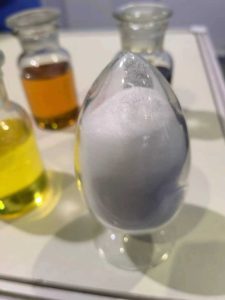
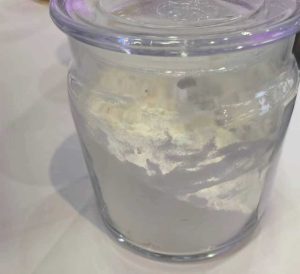
Hydroxypropylmethylcellulose is widely used as a film forming agent in automobiles, industrial paints, coatings, building materials, cosmetics, food, gelling agents, lubricants, and also as a dispersant. Its appearance is white powder like.

Read More »
Hydroxypropylmethyl Cellulose

Hydroxypropylmethyl Cellulose

Hydroxypropylmethyl cellulose is a natural polymer derived from raw materials, undergoing a series of chemical processes to produce a non-ionic cellulose compound. Specifically used in wall putty applications, hydroxypropylmethyl cellulose plays a significant role in enhancing the quality of mortar/concrete walls and ceilings, resulting in a white, smooth, and dry surface that is ideal for painting.

Read More »
Hydroxypropyl Methyl Cellulose

Hydroxypropyl Methyl Cellulose

Hydroxypropyl Methyl Cellulose is a white powder HPMC chemical that mainly thickens in paints, coatings, cosmetics, and adhesives. It is a natural polymer, and this odorless and odorless synthetic modification plays an important role in industrial production.

Read More »
Rheology Modifiers

Hydroxymethyl Cellulose

Hydroxymethyl Cellulose is very powerful, and it is also widely used in the field of application. It plays a good thickening effect and film forming effect in some lotion and cosmetics, as well as in paint coatings and lubricants. Therefore, we call it film forming agent, thickening agent, stabilizer, etc. It can also be widely used in paint coatings, cosmetics and some foods, This product has also been used.

Read More »
HPMC

HPMC

HPMC Hydroxypropyl methylcellulose or hypromellose is a type of soluble methylcellulose ether with various applications. It serves as a versatile substance employed as a thickening agent, binder, film former, and hydrophilic matrix material.

Read More »
Bubble Glass

Bubble Glass

Glass Bubbles are incredibly small spheres made from hollow glass. They look like white powder that flows easily. They’re created using a type of glass that’s resistant to water and chemicals, called soda-lime-borosilicate glass.

Read More »
What is Sorbitan Monostearate

ZDDP Additive

Zinc alkyl dithiophosphate is often known as ZDDP Additive, is an essential component that is used in lubricants, particularly in situations of mixed lubrication when there is occasional contact with surface asperities. This one-of-a-kind chemical contributes in numerous important ways to the improvement of engine performance and the safeguarding of machinery and equipment.

Read More »
Hollow glass microspheres

Hollow glass microspheres

Hollow glass microspheres serve as lightweight and chemically stable materials, commonly added to products to decrease their weight or density and enhance buoyancy. These microspheres, often referred to as microbeads or microballoons, are crafted from a combination of sodalime and borosilicate glass. These Hollow Glass Microspheres are meticulously engineered, nearly flawless, thin-walled glass bubbles with an approximate size of 50 microns.

Read More »
滚动至顶部

Ask A FREE QUOTE NOW