Category: Organoclay

Rheology Modifier

Rheology Modifier

Rheology Modifier can contribute to the improved stability and extended shelf-life of formulations. By modifying the flow properties and viscosity, these additives can inhibit sedimentation or settling of particles, pigments, or other ingredients within the formulation. This property helps maintain the integrity of the formulation over time.
Read More »
Rheology Modifiers in Paints

Rheology Modifiers in Paints

Organoclay as rheology modifiers have a significant impact on various aspects of the paint. It can influence the in-can properties. It can contribute to improving the texture of the paint while it is inside the can or in the container. Organoclay helps to maintain the paints’ structure and avoid sedimentation.

Read More »
Rheology Modifiers for Waterborne Paints

Rheology Modifiers for Waterborne Paints

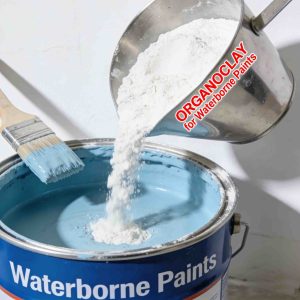
Waterborne paints have emerged as an environmentally friendly alternative to solvent-based paints. Instead of aliphatic solvents, these types of paints are composed of water as the primary solvent. It is much safer to use and less harmful to the environment and human health. Achieving optimal performance and desired properties in waterborne paints requires the incorporation of various additives, including rheology modifiers such as organoclay or organophilic clay.

Read More »
Montmorillonite Clay

Montmorillonite Clay Organoclay

Montmorillonite Clay is a type of clay that has been modified with organic compounds. It has found widespread use in the creation of polymer/clay nano-composites. These composites are made by incorporating organo-modified montmorillonite into polymers. This have gained significant attention in packaging applications.

Read More »
Organic Clay

Organic Clay

Organic clay is chemically altered with a natural component. The alteration results in the production of organic clay. It is possible to use a salt containing ammonium or quaternary amine in order to cure montmorillonite clay. The process results in a new material that has superior qualities. This gives a characteristics of reduced water permeability, increased strength, and the ability to filter out toxins in the environment around it, which is helpful in oil drilling industry.

Read More »
Organic Bentonite Clay

Organic Bentonite Clay

Organic Bentonite Clay,A modified version of conventional bentonite goes by the name ‘organic bentonite clay.’ It comes about after adding select organic components into traditional Bentonites’ mix; creating an enriching combination with improved performance characteristics suitable for many functions.

Read More »
Montmorillonite Powder

Montmorillonite Powder

Montmorillonite Powder is the kind of montmorillonite clay that has a significant amount of calcium as a component of the mineral composition of the clay. Bentonite montmorillonite powder is a more accurate word for montmorillonite clay that includes a large proportion of bentonite in its composition. Some parallels are to be drawn between montmorillonite clay and bentonite clay.

Read More »
Hectorite

Hectorite | Arcilla Hectorita

Hectorite is important to note that hectorite organoclay and bentonite organoclay are both types of swellable smectite clays. But they do possess significant differences in clay platelet size, and shape. Another difference between hectorite and bentonite organoclays lies in their composition. Hectorite clay has a lower iron content compared to bentonite clay. This lower iron content contributes to a lighter color in hectorite-based products.

Read More »
Hectorite Clay

Hectorite Clay | Organoclay

Hectorite Clay Organoclays made from hectorite are better than organoclays made from bentonite. It is much better at building structure at low stress. Even though bentonite is easy to get and inexpensive compared to hectorite clay, most organoclay products on the market are made from bentonite clay. However, hectorite-based goods work better and have better rheological qualities.

Read More »
Organo Bentonite

Organo Bentonite

Organo bentonite is utilized in anti-corrosive paints. Its use in these formulations helps provide a protective barrier against corrosion, extending the lifespan of metal surfaces. It is also found in automotive finishes, providing enhanced durability, scratch resistance, and gloss retention for a long-lasting and aesthetically appealing coating.

Read More »
Non-chlorinated organoclay

Non-chlorinated organoclay

Non-chlorinated organoclay CP-982A: Chlorine-free organophilic clay for grease, oil-based drilling fluids, and solvent-based adhesives. Strong gel build, anti-settling, stable thixotropy. Samples available.

Read More »
滚动至顶部

Ask A FREE QUOTE NOW