Your formulation is perfect on paper, but in the can, everything settles to the bottom. On the wall, it sags and runs. In storage, the phases separate. You need better rheology control.
Bentonite organoclay is used as a rheology modifier in solvent-based systems across multiple industries. It provides thickening, anti-settling, anti-sagging, suspension, and thixotropic properties in paints, coatings, inks, greases, adhesives, sealants, cosmetics, and oilfield drilling fluids.

I've spent two decades at Camp-Shinning helping customers solve rheology problems. The same organoclay technology solves completely different challenges depending on the industry. A coating needs anti-sag. A grease needs high-temperature stability. A drilling fluid needs cuttings suspension. Organoclay delivers all of this. Let me show you exactly how it works in each major application.
How Does Organoclay Function in Paints and Coatings?
Paint sitting in a can for months develops a hard sediment layer at the bottom. When you apply it to a vertical surface, it runs and sags before it dries. These are expensive problems that damage your brand reputation.
In paints and coatings1, organoclay prevents pigment settling during storage, provides anti-sagging properties during application, and controls flow and leveling. It works in solvent-based automotive coatings, industrial paints, marine coatings, wood finishes, and high-performance protective coatings.
A customer in Italy manufactures premium furniture finishes. Their wood stain kept pooling in the corners and running on vertical surfaces. They tried different resins and solvents, but nothing worked. We recommended our CP-180 grade at 1.2% addition level. The transformation was immediate. The stain stayed exactly where they applied it, gave perfect coverage, and the finish quality improved dramatically. This is what proper rheology control delivers.
Solving the Settling Problem
Pigments and fillers are denser than the liquid phase of paint. Gravity pulls them down, creating hard sediment over time. Once settled, this sediment is difficult to redisperse. Customers open the can and see separation. They think your paint is defective.
Organoclay creates a three-dimensional gel network throughout the paint. This network physically traps pigment particles and prevents them from settling. The gel structure forms at rest (low shear) and breaks down during mixing and application (high shear). This is called thixotropy. When the paint sits in the can, the gel holds everything in suspension. When you stir it, the gel breaks and the paint flows freely. When you stop stirring, the gel reforms and prevents settling.
The key is choosing the right organoclay grade and addition level. Too little, and you don't get enough gel strength. Too much, and the paint becomes too thick to apply properly. We work with coating formulators to optimize this balance. Different pigment systems and solvent types require different organoclay grades. Our CP-40 works beautifully in medium-polarity systems like xylene and aromatic solvents. Our CP-10 is designed for high-polarity systems with ketones and esters.
Controlling Application Properties
When you brush or spray paint onto a surface, several things need to happen. The paint must flow smoothly during application but then develop body immediately afterward. If it stays too fluid, it sags and runs. If it gels too quickly, brush marks remain visible.
Organoclay provides the ideal rheological profile. Under the high shear of brushing or spraying, it thins dramatically and flows easily. The moment shear stops, it begins rebuilding gel structure. This gives you a few seconds of flow and leveling (to eliminate brush marks or spray pattern), then rapid viscosity buildup (to prevent sagging). The timing of this transition is critical and can be tuned by adjusting organoclay type and loading level.
| Coating Type | Organoclay Grade | Typical Addition | Key Benefits |
|---|---|---|---|
| Automotive Refinish | CP-180, CP-40 | 0.8-1.5% | Anti-sag, high gloss, smooth finish |
| Industrial Maintenance | CP-40, CP-10 | 1.0-2.0% | Anti-settling, good brushability |
| Wood Coatings | CP-180, CP-34 | 0.5-1.5% | Clear appearance, controlled penetration |
| Marine Coatings | CP-40 | 1.0-2.0% | Anti-settling, corrosion resistance support |
| High-Temp Coatings | CP-180 | 1.5-2.5% | Thermal stability, anti-sag at elevated temp |
Why is Organoclay Essential in Lubricating Greases?
Traditional lithium-based greases break down at high temperatures. In heavy machinery, aerospace applications, and automotive bearings operating above 150°C, you need something better. Standard thickeners fail.
Organoclay serves as a high-temperature thickener in synthetic oil-based greases. It provides thermal stability up to 250°C, excellent water resistance, and superior mechanical stability. It's used in aerospace greases, automotive bearing greases, industrial high-temperature applications, and food-grade lubricants.
We developed our grease-specific grade, CP-EZ, specifically for this demanding application. A steel mill in China was losing bearings every few months due to the extreme heat from their rolling equipment. The lithium greases they used literally melted and ran out. We formulated a synthetic oil grease thickened with CP-EZ at 8% loading. Those bearings are still running two years later with no issues. The cost savings from reduced downtime paid for the switch many times over.
High-Temperature Performance
Most grease thickeners are soap-based (lithium, calcium, aluminum). These have a crystalline structure that melts at a specific temperature called the dropping point. Once the grease reaches this temperature, it liquefies and loses its lubricating properties. This is catastrophic in high-temperature applications.
Organoclay is fundamentally different. It's an inorganic mineral structure that doesn't melt. The gel network it forms in oil remains stable at temperatures far beyond where soap-based greases fail. We've tested our grease formulations at 250°C for extended periods, and they maintain their structure and performance. This makes organoclay-based greases essential for applications like:
- Kiln bearings in cement and steel plants
- Oven chain lubricants in industrial baking and automotive painting
- High-speed bearings in aircraft engines and auxiliary power units
- Heavy equipment operating in desert environments
- Automotive wheel bearings in high-performance vehicles
The manufacturing process for organoclay grease is straightforward. You heat the base oil (typically a synthetic like PAO, diester, or polyol ester), add the organoclay under high shear, add a small amount of polar activator2 (typically methanol or acetone/water mix) to help activate the gel structure, continue mixing until fully homogeneous, then add any additional additives like antioxidants or extreme pressure agents.
Performance Characteristics
Organoclay-based greases have a unique property profile that makes them suitable for specialized applications.
- Dropping Point: Most organoclay greases don't have a true dropping point because they don't melt. The standard test is run to 300°C+, and the grease still hasn't dropped. This gives them a huge advantage in high-temperature environments.
- Worked Penetration: This measures consistency. Organoclay greases can be formulated across a wide range of NLGI grades from 00 (semi-fluid) to 3 (stiff) by adjusting the organoclay loading and choice of base oil viscosity.
- Water Resistance: The organophobic nature of organoclay provides excellent water resistance. These greases don't emulsify easily and provide good protection in wet environments.
- Mechanical Stability: When subjected to mechanical working (like in a bearing), some greases soften excessively. Organoclay greases maintain their consistency well under mechanical stress.
- Pumpability: At low temperatures, some greases become too stiff to pump through centralized lubrication systems. Organoclay greases can be formulated to maintain good pumpability by using appropriate base oils and activator systems.
What Role Does Organoclay Play in Drilling Fluids?
Drilling three kilometers underground presents extreme challenges. You're pumping fluid through a tiny annular space, fighting immense pressures and temperatures. The mud must carry rock cuttings to surface while keeping the wellbore stable. Standard water-based muds fail.
In oilfield drilling, organoclay thickens oil-based and synthetic-based drilling fluids. It provides viscosity for cuttings transport, gel strength to suspend solids during circulation stops, thermal stability for deep wells, and helps control fluid loss into formations. It's essential for directional drilling and high-temperature applications.
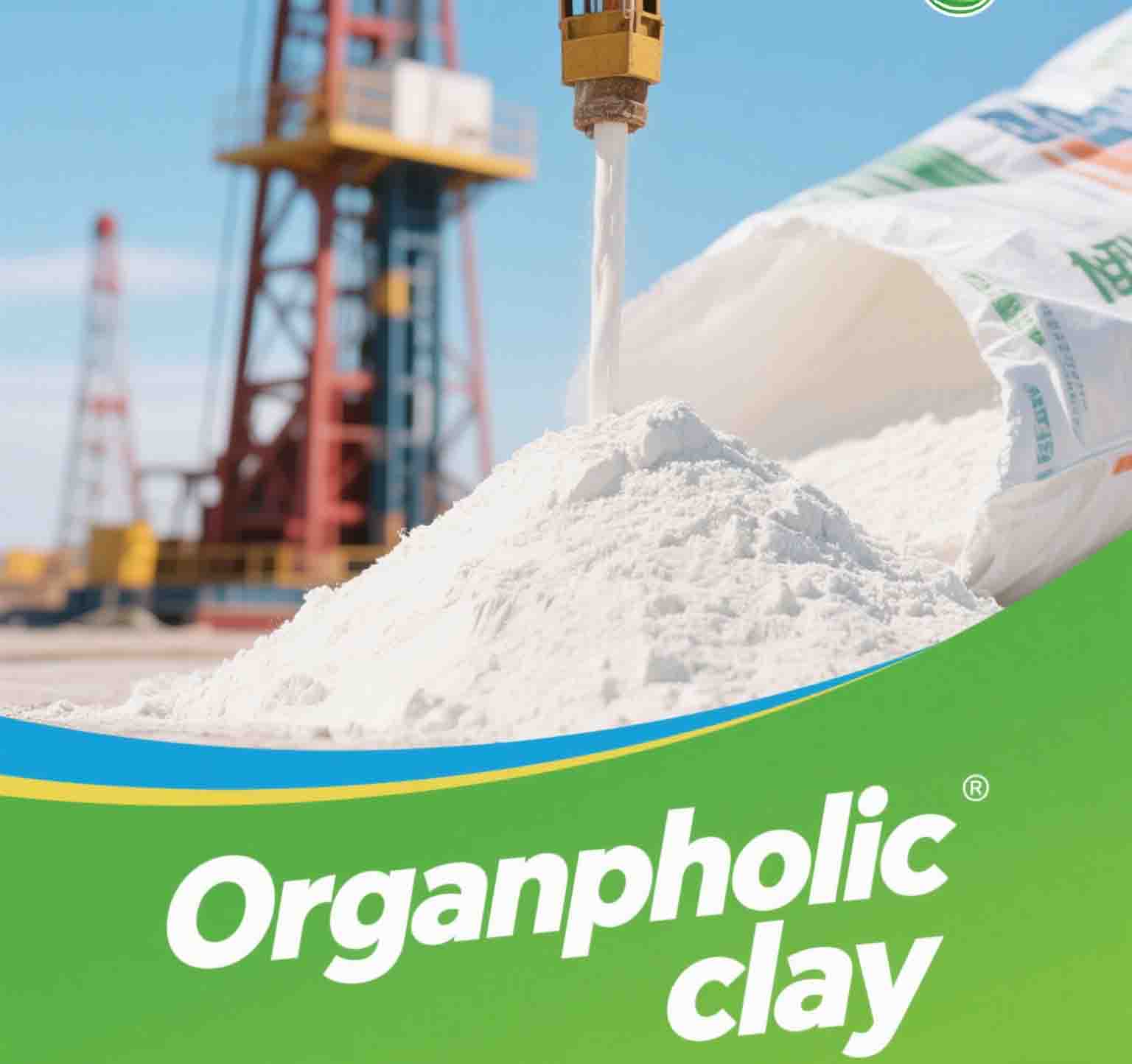
Last year, a drilling contractor in the United Arab Emirates contacted us. They were drilling through reactive shale formations at 4500 meters depth with temperatures exceeding 180°C. Their drilling fluid was breaking down, losing viscosity, and they had stuck pipe incidents. We supplied our CP-982 grade specifically designed for high-temperature, low-aromatic synthetic fluids. The mud properties stabilized immediately. They completed the well without further incidents and now specify our product for all their challenging wells.
Why Oil-Based Muds Need Organoclay
In certain drilling conditions, water-based mud simply doesn't work. Reactive shale formations absorb water, swell, and cause wellbore instability. High-temperature wells cause water-based polymer additives to degrade. Extended-reach horizontal wells require superior lubricity to reduce friction on the drill string. This is where oil-based muds (OBM) and synthetic-based muds (SBM) become necessary.
But oil and diesel don't have any natural viscosity or gel strength. You can't suspend barite (the weighting material) or drill cuttings in plain oil. This is exactly what organoclay does. When properly dispersed in the oil phase with adequate shear, organoclay creates a gel network that provides:
- Plastic Viscosity (PV): This is the viscosity component that allows the mud to carry cuttings up the annulus efficiently without requiring excessive pump pressure.
- Yield Point (YP): This represents the gel strength at very low shear rates. High YP is needed to suspend barite and cuttings when circulation is reduced or stopped.
- Gel Strength: When circulation stops completely (during connections or tripping), the mud must develop strong gel structure to prevent solids from settling. Organoclay provides progressive gel strength that builds over time.
The challenge is matching the organoclay grade to the base fluid. Diesel-based muds use different organoclay than low-aromatic mineral oil muds, which differ from synthetic ester-based muds. We produce multiple grades to cover this range.
Dispersion and Activation
Simply adding organoclay powder to oil doesn't create a gel. You need proper dispersion technique. The typical procedure in drilling fluid mixing is:
- Add the base oil to the mixing tank
- Start high-shear mixing (the mud mixing hopper creates intense shear)
- Add organoclay slowly while maintaining high shear
- Add polar activator2 (typically methanol or propanol at 20-30% of organoclay weight)
- Continue mixing for 15-20 minutes to ensure complete dispersion
- Add emulsifiers, weighting materials, and other additives
The polar activator2 is critical. It helps the organoclay platelets separate and disperse in the oil phase. Without activator, you get poor gel development and weak rheology. Too much activator can cause instability. The optimum amount depends on the organoclay grade and the base fluid polarity.
| Drilling Fluid Type | Base Fluid | Organoclay Grade | Typical Loading | Key Advantages |
|---|---|---|---|---|
| Diesel-Based OBM | #2 Diesel | CP-2, CP-150 | 2-4% | Cost-effective, good performance |
| Mineral Oil OBM | Low-aromatic mineral oil | CP-982 | 2-5% | Reduced environmental impact, stable |
| Synthetic-Based SBM | Esters, alpha olefins | CP-982, CP-992 | 3-6% | Best environmental profile, high-temp stable |
| Invert Emulsion | Oil external phase | CP-150, CP-EZ | 2-4% | Water tolerance, stable emulsion |
Field Performance Requirements
Drilling fluid specifications are rigorous. Every batch must meet API standards and operator-specific requirements. The key performance parameters that organoclay influences are:
- Plastic Viscosity (PV): Typically 20-40 cP, depending on well depth and geometry
- Yield Point (YP): Usually 15-30 lb/100ft², with YP/PV ratio between 0.5-0.75 for optimal performance
- 10-Second and 10-Minute Gel Strengths: Progressive gel development is critical; typical values are 8-12 lb/100ft² (10-sec) and 15-25 lb/100ft² (10-min)
- HTHP Fluid Loss: High-temperature, high-pressure fluid loss must be controlled below 5-8 ml/30min to prevent formation damage
- Electrical Stability: For invert emulsion systems, ES typically needs to be above 400 volts to ensure stable emulsion
At Camp-Shinning, we don't just sell organoclay powder. We work with drilling fluid companies to optimize complete formulations. We conduct jar tests to verify compatibility with their base oil and other additives. We provide technical support during field mixing and troubleshooting. This level of service is why we hold a quarter of the global organoclay market share.
Conclusion
Organoclay's versatility across industries stems from its unique rheological properties. From preventing paint sag to enabling deep drilling, its thickening and suspension capabilities solve critical formulation challenges worldwide.