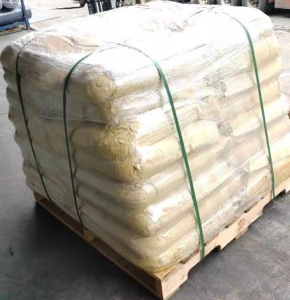
High pressure high temperature Viscosifier | HTHP Organoclay
HPHT Resistant Organoclay Viscosifier for Oilfield Mud: Optimize Drilling Fluids Under Extreme Conditions
For high pressure high temperature drilling fluid applications, our top-recommended HTHP Organophilic Clay products are CP-31, CP-EZ and CP-250A. These grades are designed to perform reliably in operating environments ranging from 180℃ to 230℃, making them ideal high temperature high pressure bentonite organoclay additive solutions for demanding downhole scenarios.
High pressure high temperature Viscosifier
We always advise customers to conduct on-site testing to select the most cost-effective model, as the success of field applications ultimately depends on the perfect matching between the organoclay grade and the specific fluid formula. The recommendation of CP-31, CP-EZ and CP-250A is based on verified laboratory test results, extensive user trials and large-scale repeat purchases, ensuring proven organoclay HPHT performance in real drilling operations.
High pressure high temperature Viscosifier
Unlike conventional organoclays modified with single long-chain quaternary ammonium salts, which tend to experience organic chain breakage and desorption under high temperatures, our HPHT resistant organoclay viscosifier for oilfield mud uses a composite modification system combining long-chain quaternary ammonium and a small amount of polar intercalation auxiliaries. This advanced treatment enhances the thermal stability of the organic coating on montmorillonite layers, prevents organic phase decomposition and clay hydrophilic reversion under HPHT conditions, and guarantees stable HPHT drilling fluid rheology at the molecular level.
In terms of high shear stability, drilling circulation generates strong shear forces in the downhole annulus that can destroy the network structure of standard organoclays and cause rapid viscosity loss. Our anti-contamination organoclay viscosifier for deep well drilling features controllable interlayer spacing of montmorillonite, allowing the colloid network to rebuild quickly after high shear. This maintains a stable yield point/plastic viscosity ratio and improves cutting carrying efficiency for safer and more efficient drilling.
High pressure high temperature Viscosifier
Dosage control varies across different drilling fluid systems, a critical factor for oilfield operators and drilling service providers. For lightweight oil-based drilling fluids with a density of 0.85~1.1g/cm³, the recommended dosage of our HPHT organoclay is 1.8~2.5%, delivering a controlled funnel viscosity of 55~70s after room-temperature preparation and high-temperature aging. For heavyweight oil-based muds weighted with barite (density 1.6~2.2g/cm³) used in high-pressure deep wells, the dosage ranges from 2.8~3.8%, effectively resolving barite sag issues with no solid phase separation after 24 hours of high-pressure static storage.
A major pain point in ultra-deep well drilling is excessive drag and unbalanced mud rheological properties. By using our HPHT organoclay viscosifier, drilling operators can effectively control the gel strength of drilling fluids.
The fluid remains free from gel caking under low-temperature static conditions and maintains proper flow resistance at high temperatures, reducing swab pressure during tripping and lowering risks of wellbore collapse and lost circulation.
Another common challenge in HPHT drilling is frequent mud replacement and high material loss caused by thermal degradation in offshore platform mud systems. Our long-acting HTHP Organophilic Clay exhibits minimal rheology fluctuation after 16 hours of hot rolling aging at 220℃, extending the service life of drilling fluids and cutting waste mud treatment costs for offshore operations.
Our HPHT Organoclay Viscosifier is tailor-modified bentonite additive specially engineered for ultra-deep, offshore and high-salt oilfield drilling operations under extreme high pressure & high downhole temperature.
High pressure high temperature Viscosifier
Different from regular organoclay products that suffer viscosity collapse and solid sedimentation above 130℃, this proprietary viscosifier adopts composite intercalation technology to maintain stable rheological property of oil-based & synthetic-based drilling fluid at 180℃~230℃ and 70MPa+ borehole pressure, effectively solving common downhole problems including barite sag, poor cuttings carrying capacity and mud property deterioration caused by formation brine invasion.
Q&A
Q: What are the recommended organoclay grades for HPHT drilling fluids and their working temperature range?
A: Our recommended grades are CP-31, CP-EZ and CP-250A, designed for stable operation in 180℃ to 230℃ downhole environments.
Q: How does your HPHT organoclay improve rheological stability compared to regular organoclays?
A: It uses long-chain quaternary ammonium and polar auxiliary composite modification to enhance thermal stability, prevent organic phase decomposition, and quickly rebuild colloid structure under high shear to maintain stable HPHT drilling fluid rheology.
Q: What key drilling problems can your HPHT organoclay viscosifier solve?
A: It controls gel strength to reduce drilling drag and wellbore risks, prevents barite sag in high-density mud, resists high-temperature thermal degradation to extend mud life, and stabilizes fluid performance under HPHT conditions for deep and offshore wells.
Organoclay HPHT Viscosifier for Extreme Condition Drilling
HPHT Modified Organoclay Viscosifier for Oil & Gas Drilling Fluids