
organobentonite
Organobentonite is a rheology modifier.
ORGANOCLAY is a bentonite clay modified with quaternary ammonium compounds, it is a universal structure-forming agent for a variety of organic media.Camp-Shinning New Material Co.Ltd, a part of Camp-Shinning of Companies, produces organoclay .
organobentonite
Organobentonite is most widely used in the production of oil-based drilling muds (OBM) and as a rheological additive in the production of organically-diluted paints, coatings, greases, adhesives, sealants, etc.
ORGANOBENTONITE IS A RHEOLOGICAL ADDITIVE FOR organically-diluted paints and coatings
ORGANOCLAY ORGANOBENTONITE IN THE OIL AND GAS INDUSTRY
Organoclays
Camp-Shinning organoclay line represents the synergy of an amazing natural clay with premier chemistries. Camp-Shinning is one of the premier suppliers of organoclays for the oil & gas drilling fluids industry.
Organoclays are modified to impart suspension and viscosity into an emulsion where the bentonite becomes hydrophobic. Organoclays are a core ingredient in paints, coatings, and other emulsifications across a range of industries.
Organoclays also provide a unique medium to adsorb organic compounds.
Camp-Shinning is a vertically integrated miner and producer of a range of organoclay products and works with customers and end users to engineer solutions.
Organobentonite is a kind of organobentonite complex that can replace the exchangeable cation in montmorillonite with organic ammonium cation, make it cover the surface of montmorillonite, block the adsorption center of water, make it lose the function of absorbing water, and become hydrophobic and lipophilic.
The bentonite after replacement reaction can also show excellent dispersion, expansion, adsorption, adhesion and thixotropy in organic solvents.
At present, the price of organobentonites is about 10000 yuan / T at a low price and 30000-40000 yuan / T at a high price. With the continuous progress of organobentonite production and processing technology and interest driven, more and more bentonite enterprises began to produce organobentonite.
organobentonite
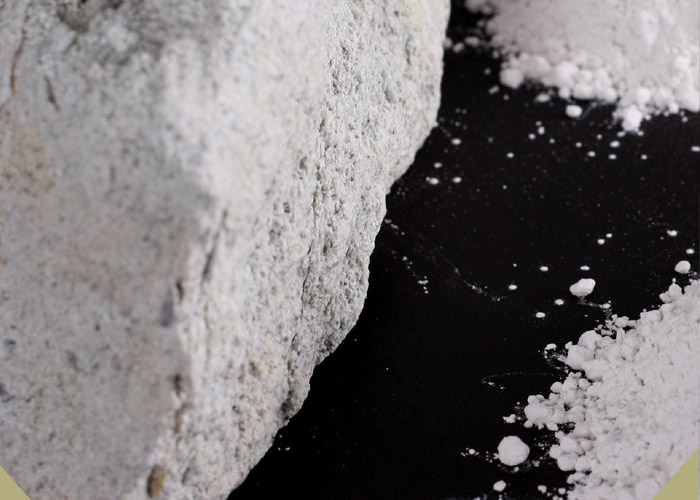
- How to prepare organobentonite?
The preparation process of organo bentonite can be divided into 3 types: wet process, dry process and pre gel method.
Pulping: the bentonite is fully dispersed with water and sand particles and impurities are removed. In order to make the bentonite disperse well, it can be mixed and added dispersant at the same time.
Purification: if the purity of the original soil is not enough, it should be purified.
Modification or activation: in order to improve the cation exchange capacity of the original bentonite, the CA bentonite and Na bentonite with lower cation exchange capacity must be modified first. In order to enhance the interaction between bentonite and organic covering agent, bentonite is usually pretreated with inorganic acid or hydrogen ion exchange resin before covering.
Organic covering: heat the pulp to 38-80 ℃, add organic covering agent slowly under continuous stirring, and then continuously stir for 30-60min to make it fully react.
After the reaction, stop heating and stirring, wash and filter the suspension, dry it, disperse and depolymerize to obtain organic bentonite product.
The selected sodium bentonite with 20% – 30% water content is directly mixed with organic covering agent, mixed evenly with a special heating mixer, and then extruded to produce organic bentonite with certain water content.
The hydrated organic bentonite can be further dried and dispersed to form powdery products, or it can be dispersed directly in organic solvents to produce gel or latex products.
(3) pre gel method
The crushed raw soil was dispersed and pulped, modified and purified, and then covered with organic materials. In the process of organic mulching, hydrophobic organic solvents (such as mineral oil) were added to extract the hydrophobic organobentonite complex into organic phase, separate the water phase, and then remove residual moisture by evaporation, and directly prepare bentonite pregel.
(4) Factors affecting the quality of organobentonite
The main factors affecting the quality of organic bentonite are the quality of bentonite (type, purity, exchange capacity, etc.), the structure, dosage and usage of organic covering agent, and the preparation conditions (pulp concentration, reaction temperature, reaction time, etc.).
Raw materials: there are strict requirements for the raw materials used in the production of organic bentonite. The content of montmorillonite is more than 90% – 95%, the particle size is less than 2 μ m, the content is more than 95%, the interlayer exchangeable cation is mainly Na +, the interlayer charge is low, the degree of isomorphic substitution order is low, and the cation exchange capacity is more than 0.8 mmol / g.
Montmorillonite with high interlayer charge and high degree of isomorphic substitution order, such as chert montmorillonite, is not suitable for preparing organic clay.
Montmorillonite, which is between the low interlayer charge and the high interlayer charge, can also produce organic bentonite with good quality by selecting appropriate organic covering agent and preparation process.
Organic covering agent: the structure, dosage and usage of organic covering agent directly affect the quality of organic bentonite. The structure type and the length of carbon chain of organic covering agents are different, so their lipophilicity is obviously different, which directly affects the application performance and use of organobentonites. The affinity of organic ammonium salt to montmorillonite is related to its relative molecular weight. The higher the relative molecular weight is, the easier it is to be adsorbed by montmorillonite. This is because higher ammonium salt not only has exchangeable cation exchange reaction with montmorillonite, but also has molecular adsorption.
Therefore, the number of long alkyl carbon atoms of quaternary ammonium salt should be more than 12.